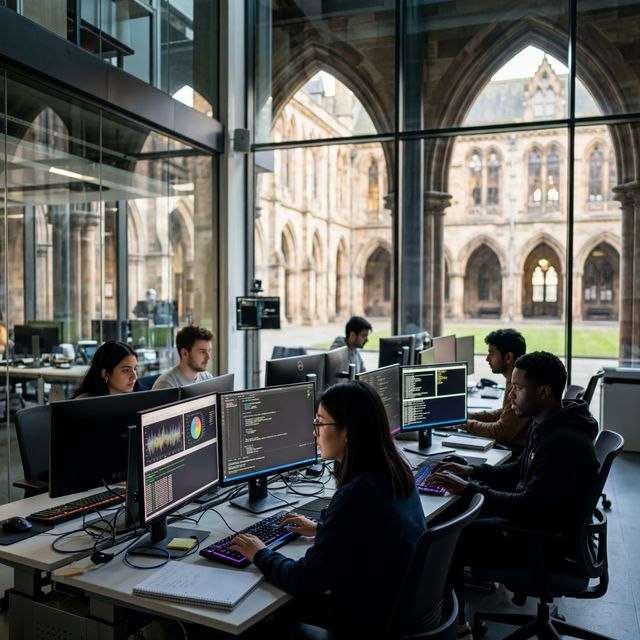
MA Classics/Computing Science
About this course
Classics and computing science is an unusual pairing that rewards the curious, because both disciplines in their different ways are concerned with systems, with how complex structures can be analysed, understood and made to function coherently. Classics involves the study of the literature, history, art and material culture of ancient Greece and Rome, and it trains you to read primary sources closely, to construct arguments from fragmentary evidence and to appreciate how ancient thought and culture laid foundations that still shape the modern world. Study of Latin and Greek language is available at any level, opening access to original texts across poetry, philosophy, history and science. Computing science provides rigorous training in algorithms, data structures, programming and the theoretical underpinnings of computation, developing the logical and mathematical precision that modern technology requires. At the University of Glasgow, this four-year full-time programme allows you to develop genuine competence in both disciplines, pursuing the ancient world and the digital present side by side. You will develop skills in critical reading and historical analysis alongside programming ability and computational thinking. A year abroad gives you the opportunity to study in a different country, potentially combining exposure to classical sites and traditions with engagement with computer science education elsewhere. A typical entry tariff of 216 points reflects the breadth of preparation the programme expects. The combination of classical and computational training is genuinely distinctive in a graduate labour market. Graduates bring analytical rigour and cultural literacy alongside technical skill, making them appealing to employers in technology, publishing, heritage, education, the civil service and consulting. Classical training is increasingly valued in technology roles precisely because it develops the kind of precise, structured thinking that programming demands. Postgraduate study in classics, computer science, digital humanities or a related field is a natural route for those who wish to specialise further.
Syllabus & Modules
Typical curriculumStudent Satisfaction
National Student Survey - 140 respondents (68% response rate)
Similarly Ranked Alternatives


What comes next? 🎓
Choosing the right university starts with choosing the right school. Explore transparent, data-driven school profiles powered by official DfE statistics.
Explore Schools on WhatSchool.ai →