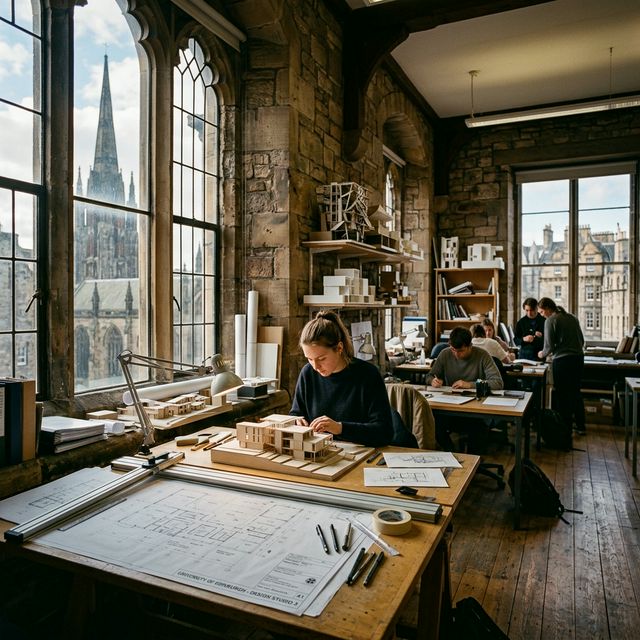
BSc Architectural Technology
About this course
Architectural Technology is the discipline concerned with the technical design and realisation of buildings. Where architecture focuses broadly on the conception and aesthetics of built form, architectural technology goes deep into the science and engineering behind how buildings actually perform: how they manage heat, light, and moisture, how they are structured and detailed, how materials behave over time, and how the construction process translates a design into a physical reality. It is a technically demanding field that requires precision, problem-solving, and an understanding of both regulatory frameworks and construction practice. At Edinburgh Napier University, this four-year full-time programme includes a year abroad, giving you the opportunity to experience architectural practice and construction culture in an international context. You will study building physics and environmental design, structural principles, construction technology, project management, and the legal and regulatory frameworks governing the construction industry. Digital design tools, including building information modelling, are integrated throughout, reflecting the profession's increasing reliance on computational methods. The degree prepares you for practice in a field that is central to how the built environment is shaped and sustained. Graduates in Architectural Technology typically work in architectural practices, construction companies, engineering consultancies, and building control. The professional route leads to chartered membership of the Chartered Institute of Architectural Technologists, and many graduates pursue this qualification during or after their first years in practice. Roles in project management, building surveying, and facilities management are also open to graduates with this background. The year abroad broadens your professional outlook and strengthens your adaptability in a field with strong international dimensions. Postgraduate study in construction management, sustainable design, or environmental engineering is available for those who wish to specialise.
Syllabus & Modules
Typical curriculumStudent Satisfaction
National Student Survey - 25 respondents (77% response rate)
Similarly Ranked Alternatives
What comes next? 🎓
Choosing the right university starts with choosing the right school. Explore transparent, data-driven school profiles powered by official DfE statistics.
Explore Schools on WhatSchool.ai →