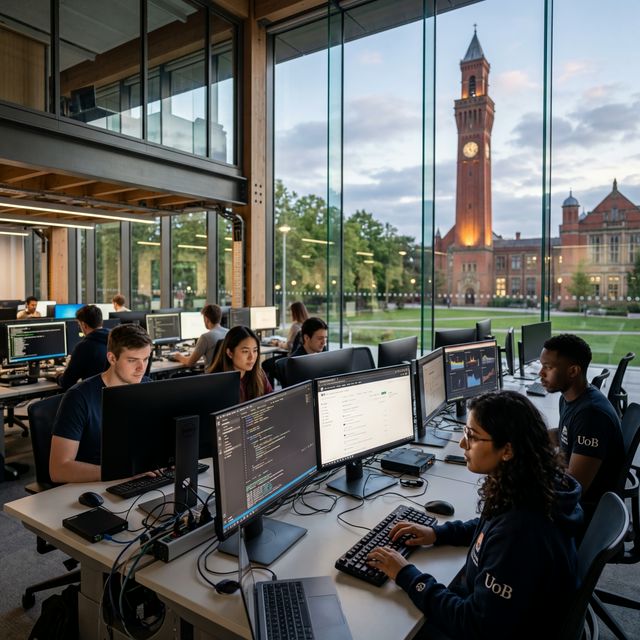
BSc Computer Games Technology
About this course
Computer games technology is the engineering discipline behind the interactive experiences that constitute one of the world's largest entertainment industries. It is not primarily about game design or artistic direction, although both inform what you do: it is about the systems, code, and technical infrastructure that make games run. Game engines, rendering pipelines, physics simulations, networking, artificial intelligence for game agents, and performance optimisation are the kinds of problems that games technology programmes address, and they require rigorous programming skills alongside an understanding of the specific technical constraints of interactive, real-time software. At Birmingham City University, this three-year full-time BSc includes a sandwich placement year and a work placement component, giving you extended professional experience in the industry before you graduate. You will work with industry-standard tools and equipment in specialist labs, developing skills in game engine architecture, graphics programming, networked gaming, and emerging technologies. The placement year is a significant differentiator: a year spent working on real games or games-adjacent software with a real team is the kind of experience that shifts a graduate from promising to ready. You will build strong programming skills, particularly in languages and paradigms relevant to real-time systems, and you will develop the problem-solving discipline needed to work on technically demanding software at scale. An understanding of the technical challenges specific to games, including frame rate constraints, responsive input handling, and scalable multiplayer architecture, gives you a profile relevant not only to the games industry but to any field requiring real-time, performance-critical software. Graduates move into roles as games programmers, engine developers, technical artists, audio programmers, and AI developers in games studios, as well as into simulation, defence, automotive, and other sectors where real-time interactive systems are deployed. Many also pursue postgraduate study in games technology, computer graphics, or software engineering.
Syllabus & Modules
Typical curriculumStudent Satisfaction
National Student Survey - 20 respondents (81% response rate)
Similarly Ranked Alternatives



What comes next? 🎓
Choosing the right university starts with choosing the right school. Explore transparent, data-driven school profiles powered by official DfE statistics.
Explore Schools on WhatSchool.ai →