Master (2 years) Biology
About this course
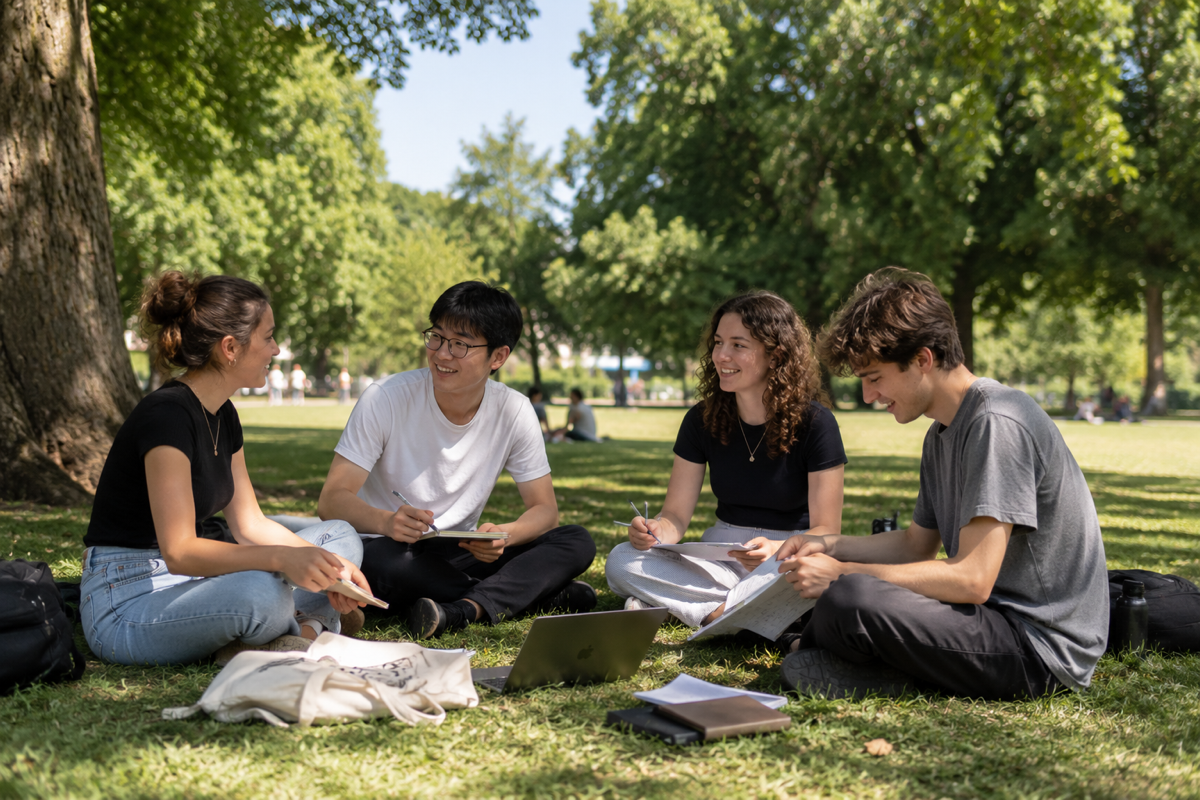
The Master’s programme in Biology will strengthen your analytical skills and develop both your critical and creative way of thinking. Enhancing the fundamental biological knowledge gained in your bachelor’s degree, you will experience many combinations of theory, observation, and experimental research during the Master’s programme, which consists of laboratory work, field excursions, lectures, and seminars. BUILD YOUR OWN STUDY PLAN On commencing the programme, you compose your own individual study plan from a wide range of courses. The considerable freedom of choice offered is an excellent opportunity for in-depth study in one of the many disciplines within biology – genetics, evolution, ecology, ecophysiology, aquatic biology, microbiology, or ecosystem function and management. Depending on which specialisation you choose, you will get the opportunity to work on field stations in Denmark, in the Arctic region or on Aarhus University’s research vessel , Aurora . STUDENT LIFE During your time as a student in the Master’s programme in Biology you will have close contact with the lecturers, who are conducting research and working with the latest knowledge within their academic field. This gives you the opportunity to work with research groups and in an international research environment. The Department of Biology has a great student environment. The focal point for many extra-curricular activities at Biology is the “House of Biology,” with a lounge, a study hall, and meeting rooms where students gather for both academic and social activities. The department has its own student-run newsletter as well as a student committee that keeps students informed about departmental activities. Several student organisations in the department organise academic activities, excursions, celebrations, and social events. CAREERS Aarhus University prepares biology graduates for the regional, national, and international job markets. Graduates in biology find work across a wide range of fields and institutions: mostly within teaching, administration, and consultancy, but also in research and communication in both private and public sectors. Biologists work across many fields, ranging from biotechnology, nature, and the environment to biological production within agriculture and the fishing industry. Many work as consultants or environmental officers in the field of environmental administration and management. Some biology graduates have found work in the media and publishing world, or as nature consultants. ADMISSION REQUIREMENTS Students must have a bachelor of science degree with subject components in biology equalling 60 ECTS credits, as well as basic subject components in mathematics, chemistry, and statistics. Other qualifications can also provide admission to the Master’s programme, provided the university assesses that their level, extent, and content correspond to the degrees mentioned above. SELECTION CRITERIA As the Master’s programme admits only a limited number of students each year, meeting the admission requirements does not in itself guarantee admission to the programme. Student places are allocated on the basis of an overall assessment. In evaluating qualified applicants, the admissions committee assesses applicants according to the following criteria: academic background; overall grade level of bachelor’s degree; grades achieved on relevant courses; and relevant courses (measured in credit units) included in the bachelor’s degree. Relevant courses include modules from the natural sciences including life sciences, mathematics, chemistry, and statistics. FOR FURTHER INFORMATION In general, admission to a master’s degree programme requires successful completion of a relevant and recognised university degree equivalent to a Danish bachelor’s degree in level and length (180 ECTS). In addition, you must meet the specific requirements for the individual programme, including language requirements. If you wish to study a master’s degree at Aar
Syllabus & Modules
Typical curriculum
Programme Info
Registry-level programme information.
What comes next? 🎓
Choosing the right university starts with choosing the right school. Explore transparent, data-driven school profiles powered by official DfE statistics.
Explore Schools on WhatSchool.ai →