Master (2 years) Sustainable Heritage Management
About this course
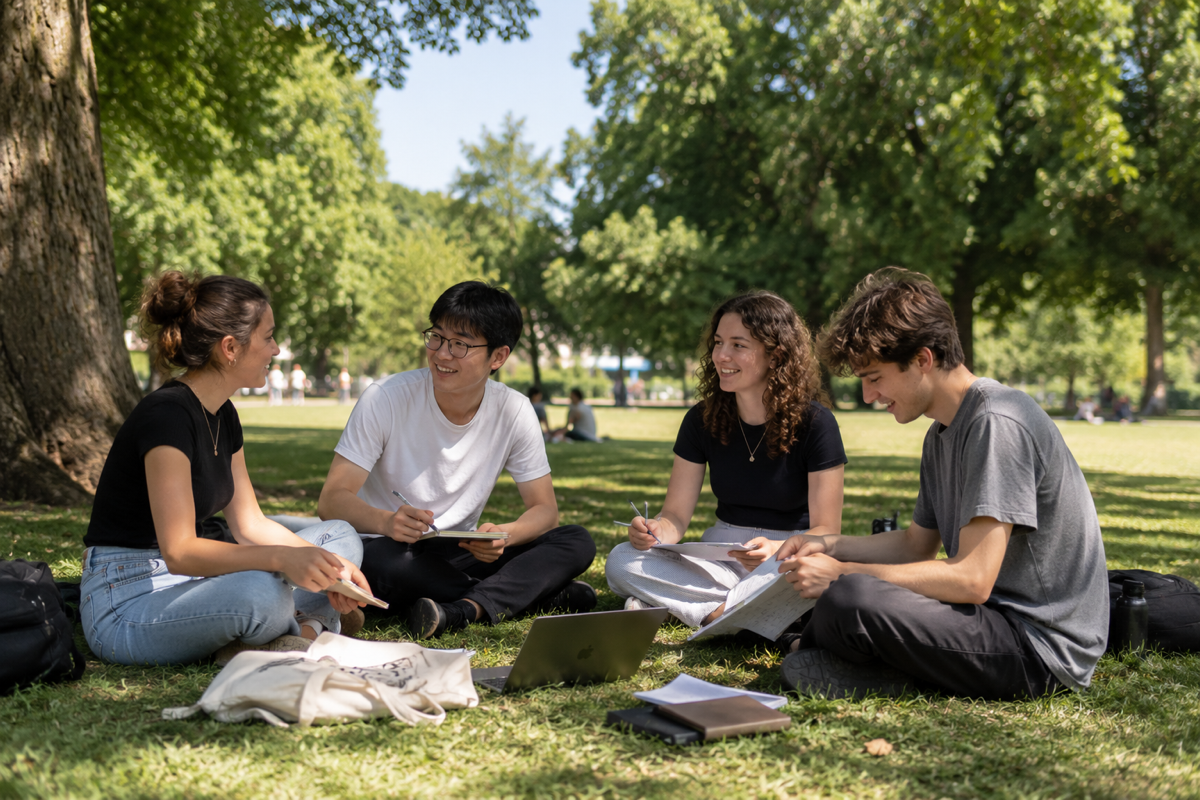
COMBINING THEORY WITH PRACTICE The MA programme in Sustainable Heritage Management at Aarhus University introduces you to the knowledge and competencies you will need to meet the multiple challenges of contemporary heritage policy, management, and research. Working with cultural and natural heritage means being conscious of, and taking responsibility for, the links between humans, the environment, and what remains from the past. We acknowledge that heritage is also an integral part of the present, and a powerful resource for future-making. The Sustainable Heritage Management programme equips you, through engaging with critical theory and best practice, with the skills necessary to plot your route through the exciting, expanding, and increasingly complex field of heritage studies and practice. You will be trained in a uniquely interdisciplinary environment to understand, assess, and sustain heritage sites and resources. Furthermore, you will be immersed in a critical understanding of the human social, political, and economic relationships in which heritage processes and practices are embedded, and gain the confidence to strategize how you develop, revise, and innovate the future shape of the sector. HERITAGE AS A RESOURCE The Sustainable Heritage Management programme qualifies you to analyse and respond ethically to the demands of heritage work, providing not only a sophisticated intellectual framework, but also a practice-based toolbox of skills. You will learn to tackle the pressing challenges of heritage management, and heritage-focused research, on local and global scales. A HIGHLY INTERDISCIPLINARY FIELD Heritage is a highly interdisciplinary field, drawing on methodologies, theories, and approaches from several disciplines, including archaeology, anthropology, architecture, art history, history, geography, politics, and many others. The Sustainable Heritage Management programme at Aarhus University is anchored in an interdisciplinary research environment that includes engaging with researchers from archaeology, anthropology, geography, global studies, museology, religious studies, and postcolonial studies, as well as heritage practitioners. This means that during your course of studies you will be equipped to work not only with material forms of cultural heritage, landscapes, and environments, but also with intangible heritage, text, images and, not least, people and their various perceptions of, and investments in, heritage. The programme intersects with the internationally renowned Moesgaard Museum and the wider Moesgaard Forest environment, which is located just outside Aarhus, affording collaborative opportunities for students and staff in this university/museum environment. Your core lecturers are active in the global heritage arena and are well placed to provide insights into heritage issues and practices elsewhere, including through their many ongoing projects, collaborations, and contacts; this also includes potential internships and fieldwork opportunities. STUDENT LIFE The Sustainable Heritage Management programme is based at the Department of Archaeology and Heritage Studies at Moesgaard, an eighteenth-century manor house newly equipped with state-of-the-art facilities that also houses the Department of Anthropology. Here you will have access to a library, computers, a common room, lounges, and a cafeteria, as well as the internationally renowned archaeology and anthropology museum MOMU ( www.moesgaardmuseum.dk ), and the surrounding hundred hectares of beautiful fields and woodlands leading down to the sea. The Department-wide student society, Hikuin, organizes a range of events and discussions, as well as the Moesgaard Friday Bar. In addition, there are regular SHM-specific events, such as the ‘Heritage Hangout’, which combines professional scholarship and a supportive social environment to act as an exciting and simulating scholarly experience. CAREERS Graduates in Sustainable Heritage Management are qualifi
Syllabus & Modules
Typical curriculum
Programme Info
Registry-level programme information.
What comes next? 🎓
Choosing the right university starts with choosing the right school. Explore transparent, data-driven school profiles powered by official DfE statistics.
Explore Schools on WhatSchool.ai →